The Remote Work Double Bind: Why Flexibility Is a Business Imperative

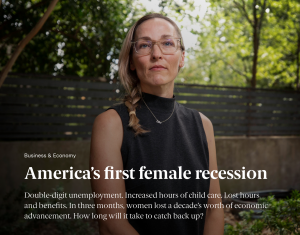
A recent article in The Wall Street Journal highlighted what we already know: flexibility is not optional for women, it’s essential. More women are working from home than men, yet thousands are leaving the workforce as flexibility fades. More women are choosing flexibility, even as companies push for a return to the office. The trade-off is real: working from home makes it easier to balance caregiving and career, but it can also slow promotions and earning power.

Still, this is not a setback, it’s an opportunity. Women are showing that flexibility is essential, not optional, and in doing so, we are reshaping the future of work. By staying engaged—by working with The Second Shift —we build careers on our own terms. Flexibility isn’t a weakness. It’s proof of resilience, creativity, and leadership. It’s the foundation on which women build sustainable careers and lasting financial independence.

Yes, there is the remote work double bind: flexibility keeps women in the workforce, but a lack of office “face time” can slow promotions and pay growth. As one wealth manager is quoted in the WSJ, “The push to go back to work is really tougher for women, but the reality is, it’s always been tougher for women in the workforce.”

But here’s our opportunity: this data proves women are leading the charge to redesign work. By staying engaged women build the careers they want on their terms. At The Second Shift, we see opportunity in these numbers and we view this as a moment not of retreat, but of possibility. Flexibility isn’t a perk, it’s infrastructure. And the fact that so many women are insisting on it shows that together we are reshaping the future of work in real time.

The Remote Work Double Bind: Why Flexibility Must Be Core Strategy

The Challenge Unfolding


What This Means for Your Organization

1. Talent Loss Is Real and Measurable
Rather than a temporary hiccup, what we’re seeing is a dramatic exodus: working mothers are stepping back or out entirely due to shrinking flexibility—many not by choice, but necessity. This shift undercuts both equity and your talent pool.

2. Advancement Penalty for Remote Work
As the WSJ points out, remote work often results in less visibility, fewer mentorship opportunities, and slower promotion pathways for women.¹Wall Street Journal If your advancement metrics are tied to physical presence, you’re unintentionally sidelining high-value female talent.

3. Financial and Strategic Impact
Every departure has both immediate and long-term costs: recruitment, lost institutional know-how, diminished innovation and morale. The erosion of women’s financial independence—including retirement readiness—is a broader economic risk that echoes through households and communities.


Clients: Here’s What Works—and What’s at Stake

A Strategic Path Forward

  • Redefine Success Metrics: Shift from “hours at desk” to outcomes, collaboration, and value delivered.

  • Institutionalize Hybrid Leadership Development: Offer mentorship, sponsorship, and visibility programs that include remote workers as equals.

  • Embed Flexible Work as Infrastructure, Not Charity: Normalize it across all levels—not just as an exception.

Why It Pays Off

  • Retaining skilled women reduces turnover costs and sustains organizational knowledge.

  • A diverse leadership pipeline boosts innovation and reflects the values of your workforce.

  • Flexibility sends a clear message: you meet your employees where they are—and they deliver where it matters.


At The Second Shift, we’ve always held: Flexibility isn’t a perk—it’s high-value infrastructure. The WSJ and Business Report data make that non-negotiable in 2025. If companies continue to roll back remote and hybrid policies without investing in equitable structures, women—especially mothers—will be forced to choose: career or caregiving. And many are already making that choice under duress.

This isn’t just an HR issue—it’s a business imperative. Support flexibility, and you retain your top-tier women; rescind it, and you risk losing them—and the future leaders they would become.

Learn to Invest with Confidence — 20% Off Courses from CFA Shal Ahmed

Second Shift member Shal Ahmed, CFA — a seasoned investor with 20+ years of Wall Street experience — is offering her ShalnCo digital investing courses at an exclusive 20% discount for our community. Designed to empower women with clear, practical financial education, these courses help demystify the stock market and give you the tools to build lasting wealth.

https://shalnco.com/#/landing/sub/courses


5 LinkedIn Signals to Find Real Jobs Faster


The 2025 job market is crowded and competitive: application volumes are at record highs, automated screening filters most résumés before a human sees them, and inactive “ghost” postings still waste candidates’ time. Fortunately, LinkedIn has introduced new transparency features that reveal which roles are current, which employers are responsive, and which postings are verified. The five tips below explain how to use these signals to focus your effort on opportunities that are truly worth pursuing.


1. Give priority to jobs with the Promoted by Hirer label

When a posting carries the “Promoted by hirer” tag, it means the employer paid to surface that job to candidates who match its criteria— a strong hint the role is current and the hiring team is motivated to fill it quickly. These postings are also algorithmically matched to your profile, so your background is already resonating with what the company needs. Treat them as warm leads and tailor your application accordingly.


2. Check Responsive Insights before you click “Apply”

LinkedIn now shows whether a hiring team is actively reviewing applications and how quickly they tend to respond. Listings marked “Actively reviewing” or showing short average response times deserve your energy; they signal a live search rather than a placeholder ad. Focusing on these roles can spare you weeks of waiting and wondering.


3. Look for the blue verification badge

A small checkmark on a job post (or company page) confirms LinkedIn has verified the employer’s identity or the poster’s affiliation. While it doesn’t guarantee you’ll land the job, it does reduce the risk of scams and “ghost” roles—critical peace of mind when you’re already juggling career, family, and everything else.


4. Pair those signals with a high-impact profile

Promoted, verified, and responsive jobs still flow through keyword-driven applicant-tracking systems. Make sure your headline and “About” section echo the titles, core skills, and outcomes that appear in your target postings. Recruiter Theresa Park credits this keyword alignment—and active engagement on the platform—with landing a call from Apple even when she wasn’t actively searching.


5. Activate your network for a warm introduction

Once you’ve spotted a promising, responsive, or promoted listing, scan the “People” tab to see who in your first- or second-degree network works there. A quick message to a former colleague or fellow alum can transform a cold application into a personal referral, dramatically improving your odds of an interview. Combine that warm intro with the signals above, and you’re no longer competing in a crowded field—you’re running in the fast lane.


Summer 2025 Women in the Workforce Update

June and July saw key shifts for women in top executive roles, including new CEO appointments, major company milestones, and leadership transitions across tech, media, and sports. While the number of women leading Fortune 500 companies hit a record high, recent data shows that broader progress remains uneven across the C-suite and boardrooms.


Fortune 500 & C‑Suite movement 

  • In June, the number of female CEOs in the Fortune 500 reached a record high of 55—about 11%—up from 52 in 2023–24

  • However, early July saw a shift: when Hershey’s CEO Michele Buck departed, the count dipped by one

  • Broader C‑Suite trends are mixed. Challenger, Gray & Christmas reports only 25% of new CEO appointments in 2025 were women—down from nearly 30% last year—and female CEO departures now see 56% replaced by men

New top-tier CEO appointments

  • Cindy Rose, former Microsoft COO, was appointed CEO of WPP, marking the first woman to lead a global advertising holding company.;

  • Linda Yaccarino announced her resignation as CEO of X- closing a dynamic ~2‑year tenure in media/tech


Notable female-led companies and fresh funding

  • Michele Kang expanded her influence in women’s sports: she became president of Olympique Lyonnais, and her Kynisca initiative invested $25 million in U.S. Soccer through its Innovation Hub

  • At Instacart, Fidji Simo is set to transition into a new CEO role at OpenAI Applications later this year, after stepping down mid-2025

  • In June, Anjali Sud’s streaming platform Tubi surpassed 100 million MAUs and over $1 billion in annual revenue; she also joined Harvard’s Board of Overseers in May


Industry trends & barriers

  • Despite reaching new CEO milestones, gender diversity at board level is slowing: only 37% of new S&P 500 board seats went to women in early 2025—a drop from 41% in 2024—and it’s the lowest rate in six years

  • This plateau coincides with broader pushbacks against DEI efforts, fueled by political shifts and conservative litigation

  • Still, economists and advocates stress that increasing women in senior roles would significantly boost U.S. GDP—one analysis estimates adding 7 million women could raise output by 4.2%


In summary

  • Fortune 500 female CEOs hit an all-time high in early June, though recent exits show the fragility of progress and systemic headwinds—slowing board diversity and anti-DEI sentiment—mean true equity remains a challenge.

Polyworking: What Working Mothers Have Mastered for Decades

Suddenly “polyworking” is the buzzword of the moment, but chances are you’ve been living it for years—simultaneously earning from several roles while orchestrating the nonstop dance of work, family, and everything in between. A surge of media attention—Harper’s Bazaar calls it “Gen-Z’s answer to a fraught job market” —has turned the practice into a headline, but the skill set is anything but new to the Second Shift community.

What is new is the scale. Federal data show that 8.8 million Americans held multiple jobs in April 2025, pushing the multi-jobholder rate up to 5.4 percent overall and 5.8 percent for women. Among millennials, the numbers are even starker: more than half now juggle at least two income streams, with nearly a quarter balancing three jobs and a full third holding four or more. Remote and hybrid schedules have removed the friction of second commutes, turning what used to be an after-hours “side hustle” into a seamless shift between Zoom rooms.

Why the rapid rise? Stubborn 3 percent inflation and plateauing wage gains make a single paycheck feel perilous, while pandemic-era layoffs reminded everyone that “job security” can vanish overnight. Polyworking spreads risk, pads savings, and—when chosen well—creates space for passion projects that a single role can’t fund.

For mid-career women, framing life through the lens of polyworking can feel strangely validating: the world is finally naming the logistical ballet you’ve choreographed for years. It also unlocks language to market your versatility. When you list fractional roles, board seats, and consulting gigs on a résumé, the through-line—leadership, revenue impact, subject-matter depth—becomes the story, not the number of plates you’re spinning. Employers are listening; they’re increasingly hungry for executives who can toggle between strategy sessions, budget dashboards, and creative side ventures without missing a beat.

Perhaps most important, recognizing yourself as a polyworker is a reminder that you’re not alone. The vocabulary may be new, but the community—and the collective expertise—has been here all along, proving that “doing it all” isn’t a burden; it’s a competitive advantage.

5 LinkedIn Signals to Find Real Jobs Faster

The 2025 job market is crowded and competitive: application volumes are at record highs, automated screening filters most résumés before a human sees them, and inactive “ghost” postings still waste candidates’ time. The Second Shift is an amazing tool for job hunting but it should be one tool in your tool box. Here’s some good news: LinkedIn has introduced new transparency features that reveal which roles are current, which employers are responsive, and which postings are verified. The five tips below explain how to use these signals to focus your effort on opportunities that are truly worth pursuing.


1. Give priority to jobs with the Promoted by Hirer label

When a posting carries the “Promoted by hirer” tag, it means the employer paid to surface that job to candidates who match its criteria— a strong hint the role is current and the hiring team is motivated to fill it quickly. These postings are also algorithmically matched to your profile, so your background is already resonating with what the company needs. Treat them as warm leads and tailor your application accordingly.

2. Check Responsive Insights before you click “Apply”

LinkedIn now shows whether a hiring team is actively reviewing applications and how quickly they tend to respond. Listings marked “Actively reviewing” or showing short average response times deserve your energy; they signal a live search rather than a placeholder ad. Focusing on these roles can spare you weeks of waiting and wondering.

3. Look for the blue verification badge

A small checkmark on a job post (or company page) confirms LinkedIn has verified the employer’s identity or the poster’s affiliation. While it doesn’t guarantee you’ll land the job, it does reduce the risk of scams and “ghost” roles—critical peace of mind when you’re already juggling career, family, and everything else.

4. Pair those signals with a high-impact profile

Promoted, verified, and responsive jobs still flow through keyword-driven applicant-tracking systems. Make sure your headline and “About” section echo the titles, core skills, and outcomes that appear in your target postings.

5. Activate your network for a warm introduction

Once you’ve spotted a promising, responsive, or promoted listing, scan the “People” tab to see who in your first- or second-degree network works there. A quick message to a former colleague or fellow alum can transform a cold application into a personal referral, dramatically improving your odds of an interview. Combine that warm intro with the signals above, and you’re no longer competing in a crowded field—you’re running in the fast lane.


Bottom line: The job market may be tough, but LinkedIn’s new transparency tools hand you a smarter playbook. Layer those cues onto a keyword-rich profile and an activated network, and you’ll spend less time chasing dead ends and more time landing interviews that count.

How Employers Can Support Working Moms Beyond Flexibility

While flexibility is one important aspect of supporting working moms, it’s not the only way employers can help. There are many other strategies companies can use to foster an environment where working mothers can thrive.

Key Ways Employers Can Support Working Moms:

Offer Paid Family Leave: Paid family leave is critical for allowing mothers to recover physically and emotionally after childbirth, while also having time to bond with their children without worrying about financial strain. This can make a significant difference in their career satisfaction and long-term well-being.
A study from the Institute for Women’s Policy Research shows that paid parental leave improves both short-term and long-term health outcomes for mothers and children.

Invest in Childcare Support: Many working mothers struggle with finding quality, affordable childcare. Companies that offer childcare subsidies or on-site childcare can help alleviate one of the largest stressors for working parents. A survey from the Society for Human Resource Management found that 33% of working mothers say childcare challenges impact their job satisfaction and productivity.

Create Leadership Development Programs for Mothers: Working mothers often face barriers to leadership positions, yet they have the skills to excel. Employers can create mentorship and leadership development programs designed to support mothers in advancing their careers.
A report from Catalyst found that women who participate in formal mentorship programs are 60% more likely to be promoted.

Foster a Family-Friendly Culture: Companies that cultivate a culture of understanding and empathy towards working parents can increase employee loyalty and job satisfaction. This includes encouraging open communication about family-related needs and challenges, and supporting employees in balancing their responsibilities.

Companies that embrace a family-friendly culture see higher employee engagement and retention, as found in a study by Gallup. Paid family leave improves health outcomes for mothers and children (Institute for Women’s Policy Research). 33% of working mothers say childcare challenges impact their job satisfaction (Society for Human Resource Management).
60% of women who receive mentorship are more likely to be promoted (Catalyst).

Skills-Based Hiring: Unlocking Hidden Potential

Resumes tell a story—but not always the complete one. Traditional hiring methods often rely heavily on past industry experience, titles, or specific degrees, inadvertently excluding talented individuals who possess highly transferable and valuable skills. This approach disproportionately impacts women who have taken career breaks, pivoted between industries or pursued non-linear career paths.


Studies, including recent findings from Harvard Business Review, show that companies that adopt skills-based hiring benefit significantly, experiencing up to 60% higher employee performance and 90% higher retention. This shift allows companies to tap into a diverse, capable, and largely untapped talent pool.


At The Second Shift, we successfully placed investment bankers into CFO roles at small companies, leveraging their strong financial acumen and strategic insight, even if they lacked traditional CFO experience. Similarly, a brand marketer who built a career in publishing possesses transferable marketing and brand-building skills that make them ideally suited to pivot successfully into roles within industries like beauty despite not having direct experience with CPG marketing.


Embracing skills-based hiring isn’t just inclusive; it’s strategic. Organizations thrive when they recognize talent beyond industry-specific experience. It’s time to redefine “qualified” and hire individuals based on what they can achieve, not just what they’ve already done.


Skills-Based Hiring: Unlocking Hidden Potential

In today’s rapidly changing job market, finding the perfect candidate may feel daunting. Companies traditionally rely on industry experience, familiar job titles, and linear career paths to filter applicants. While seemingly efficient, this conventional approach can inadvertently exclude highly skilled candidates who don’t neatly fit within traditional hiring criteria—especially women who are returning to work after breaks, making career pivots, or entering new industries.

Shifting toward skills-based hiring—focusing on transferable capabilities rather than past titles or specific industry experience—can significantly widen the candidate pool and enhance workforce diversity. According to recent data from LinkedIn’s Future of Recruiting Report, organizations prioritizing skills over pedigree see tangible business benefits, including up to 60% improved employee performance and up to 90% better retention rates.

Why does this approach work? When you focus on skills, you capture what predicts job success: adaptability, critical thinking, problem-solving abilities, communication skills, and resilience. Particularly for mid-career women, whose career trajectories often don’t align perfectly with rigid hiring requirements, a skills-first mindset acknowledges the depth of their expertise, regardless of how and where they acquired it.

This hiring shift also provides substantial business benefits. Skills-based organizations foster more inclusive cultures and diverse teams are consistently proven to deliver greater innovation and financial returns. A McKinsey report highlights that companies with higher gender diversity outperform their less-diverse counterparts financially by 25% or more.

At The Second Shift, we’ve witnessed firsthand how hiring based on transferable skills and potential—not just previous titles—helps companies secure exceptional talent they might otherwise overlook. For example, we successfully placed investment bankers into CFO roles at small companies, leveraging their strong financial acumen and strategic insight, even if they lacked traditional CFO experience. Similarly, a brand marketer who built a career in publishing possesses transferable marketing and brand-building skills that make them ideally suited to pivot successfully into roles within industries like beauty despite not having direct experience with CPG marketing.


Embracing skills-based hiring isn’t just inclusive; it’s strategic. Organizations thrive when they recognize talent beyond industry-specific experience. It’s time to redefine “qualified” and hire individuals based on what they can achieve, not just what they’ve already done. Skills-based hiring is not simply a novel approach—it’s a strategic advantage in building robust, diverse, and high-performing teams.


Bottom Line: When you stop limiting your search to industry experience alone and embrace skills-based hiring, you open doors to new talent, better performance, and more inclusive workplaces.

The State of Women at Work in 2025: Keeping the Momentum

March is Women’s History Month—a time to celebrate progress, recognize challenges, and recommit to advancing women in the workforce. As we look at the state of women at work in 2025, one thing is clear: while there has been progress, the fight for equity is far from over. The gains we’ve made in recruitment, leadership representation, and awareness of workplace inequities must be reinforced, or we risk losing critical momentum.


A key issue we continue to see is the “broken rung”—the first step on the corporate ladder where women fall behind in promotions to manager-level roles. According to the latest McKinsey & Lean In Women in the Workplace Report, for every 100 men promoted, only 81 women receive the same opportunity. This disparity compounds over time, making it harder for women to reach leadership positions. Without intervention, the pipeline of women in leadership remains stagnant.


At The Second Shift, we are committed to keeping women in the talent pipeline by providing access to flexible, high-level job opportunities that match their skills and career goals. We work to ensure that companies recognize the business case for retaining mid-career women by offering real pathways to leadership rather than allowing them to be sidelined by outdated systems.


Yet, at a time when corporate focus on DEI is waning, it is critical to stay vigilant. The push for diverse hiring, gender equity, and inclusive leadership is not just a trend—it’s a business imperative. Studies consistently show that diverse teams drive better innovation, stronger performance, and long-term success. Companies must resist the temptation to deprioritize these efforts and instead double down on making workplaces more equitable. Progress doesn’t happen by accident; it requires commitment, action, and accountability.


Stay engaged, stay ambitious, and let’s keep the momentum going.

Jenny and Gina and The Second Shift Team